Introduction
If you’ve ever tasted wild honey across different months, you may have noticed something interesting — the taste is never the same. Sometimes it’s light and floral, sometimes bold and earthy, and other times slightly tangy or intense. This natural change often raises one question:
Why wild honey tastes different every season?
The answer lies deep in forests, flowers, bees, and the rhythm of nature itself.
Wild Honey Is Shaped by Nature, Not Factories
Unlike commercial honey, wild honey is not blended or standardized to taste the same every time. It is collected from free-flying bees that collect nectar from wildflowers in the forest. Because nature changes with every season, wild honey naturally reflects those variations.
Each jar tells the story of:
- The flowers that bloomed
- The forest region
- The season of harvest
- The bee species
This is why wild honey is never uniform — and that’s exactly what makes it special.
Seasonal Flowers Change the Taste
Bees collect nectar from wildflowers that bloom only during specific seasons. As the seasons change, different flowers come into bloom, each offering its own unique nectar with distinct taste, texture, and health benefits. This seasonal diversity is what gives wild honey its changing taste, texture, and color throughout the year.
- Summer honey may taste strong and herbal
- Monsoon honey can be darker and richer
- Winter honey often feels smooth and mild
When the flowers change, the nectar changes — and so does the honey’s taste, texture, and color.
Forest Regions Add Their Own Flavor
Wild honey collected from different forest regions carries its own unique character. Honey harvested from hill forests, tribal regions, or deep forest reserves will never taste the same — even when collected during the same season.
This regional diversity gives wild honey:
- Different medicinal benefits
- Unique taste
- Varying textures and colors
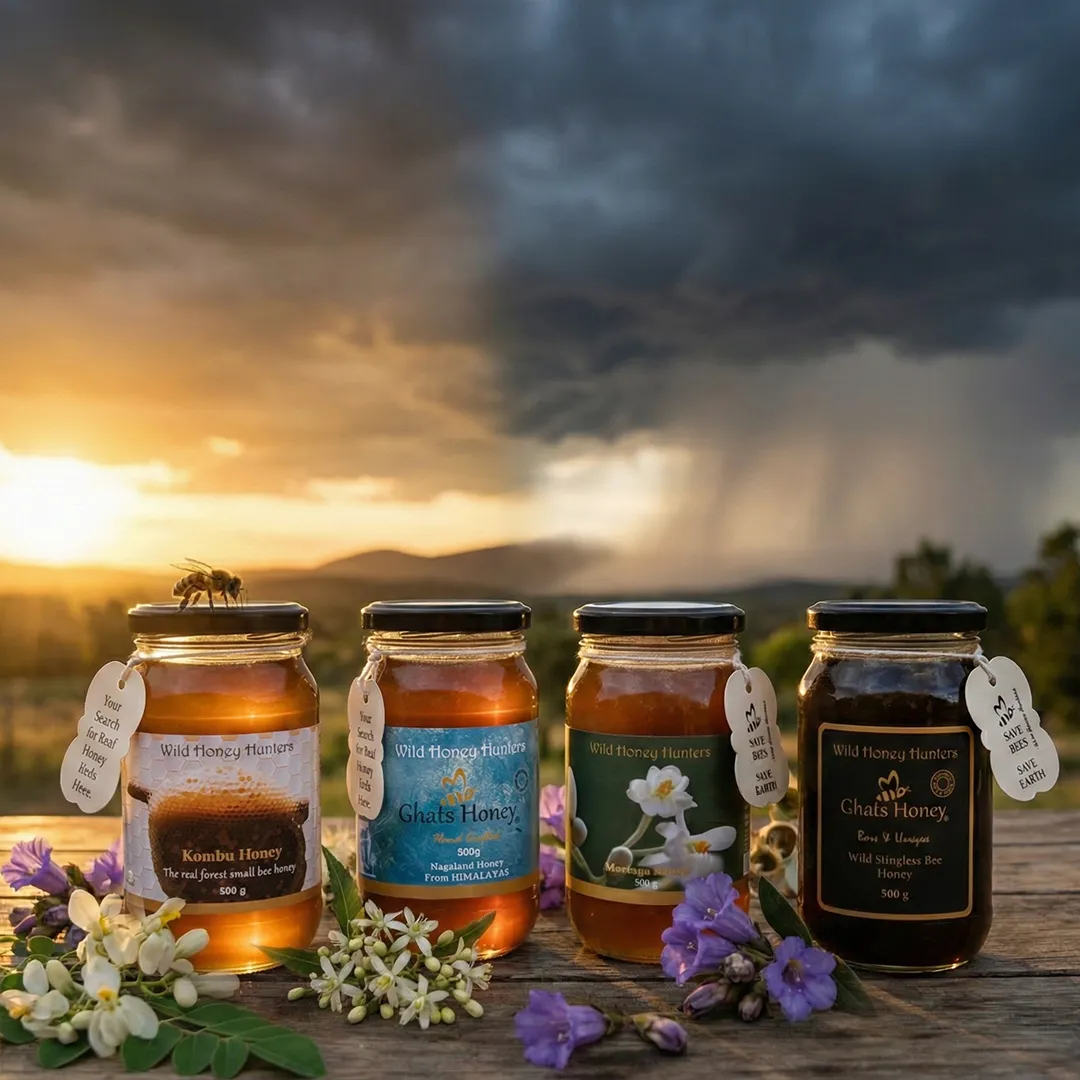
At Wild Honey Hunters, honey is sourced from untouched forest regions, which naturally enhances this diversity.
Bee Species Matter Too
Not all bees are the same. Wild honey can be produced by various species of bees, including native forest bees, small bees, and stingless bees.
Each bee species processes nectar differently. This affects the honey’s:
- Taste
- Texture
- color
That’s why small-bee honey may taste slightly tangy, while forest bee honey may feel deep and robust.
Weather Plays a Big Role
Rainfall, temperature, and humidity influence nectar flow. In dry seasons, nectar becomes more concentrated. During rainy seasons, nectar can be lighter but richer in aroma.
This natural interaction between weather and flowers directly impacts:
- Honey texture
- Moisture content
- Flavor profile
No machines control this — only nature does.
Traditional Harvesting Preserves Natural Taste
Wild honey harvested using traditional methods is gently handled, without excessive heating or heavy filtration. This careful approach helps preserve its natural enzymes, pollen traces, and unique flavor. Because the honey is minimally processed, it retains its true character — reflecting the season, the flowers, and the forest from which it comes.
Why Seasonal Taste Is a Sign of Authenticity?
Many people expect honey to taste the same every time they buy it. But in reality, consistent taste often means heavy processing or blending. Wild honey, on the other hand, changes naturally with the seasons.
Wild honey that changes in taste, texture, and color because
- It is closer to nature
- Not mixed or standardized across harvests
- Reflects real forest conditions
Seasonal variation isn’t a flaw — it’s a clear sign of authenticity and purity.
FAQs
Why does wild honey taste different each time I buy it?
Wild honey varies naturally based on the flowers in bloom, the season of harvest, the forest region, and the bee species. These natural changes reflect the honey’s taste, color, and texture and are a sign of pure, unprocessed wild honey.
Is changing taste a sign of pure wild honey?
Yes. Seasonal changes in taste usually indicate minimal processing and natural sourcing.
Does seasonal wild honey have different health benefits?
Different seasons bring different floral sources, which can slightly change nutrient and antioxidant profiles.
Why is some wild honey darker than others?
Darker wild honey usually comes from certain forest flowers that produce nectar. It often has a deeper color, stronger flavor, and bold texture compared to lighter varieties, depending on the season and region of harvest.
Can wild honey crystallize in some seasons?
Yes. Crystallization is a natural process and does not affect quality.
Final Thoughts
Wild honey has a unique flavor that varies with each season, as it reflects the changes in nature. Flowers, forests, bees, weather, and traditional harvesting all come together to shape its flavour.
When you choose wild honey from Wild Honey Hunters, you’re not just buying honey — you’re tasting a moment in nature’s calendar.