
- Introduction
- The Role of the Mudakathan Flower
- Wild Bees Follow Nature, Not Schedules
- Forest Climate Controls the Season
- Traditional Harvesting Keeps It Seasonal
- No Blending, No Mixing Across Seasons
- Why Seasonal Honey Tastes Different?
- Why Mudakathan Honey Is Limited?
- How to Use Mudakathan Honey?
- FAQs
- Final Thoughts
Introduction
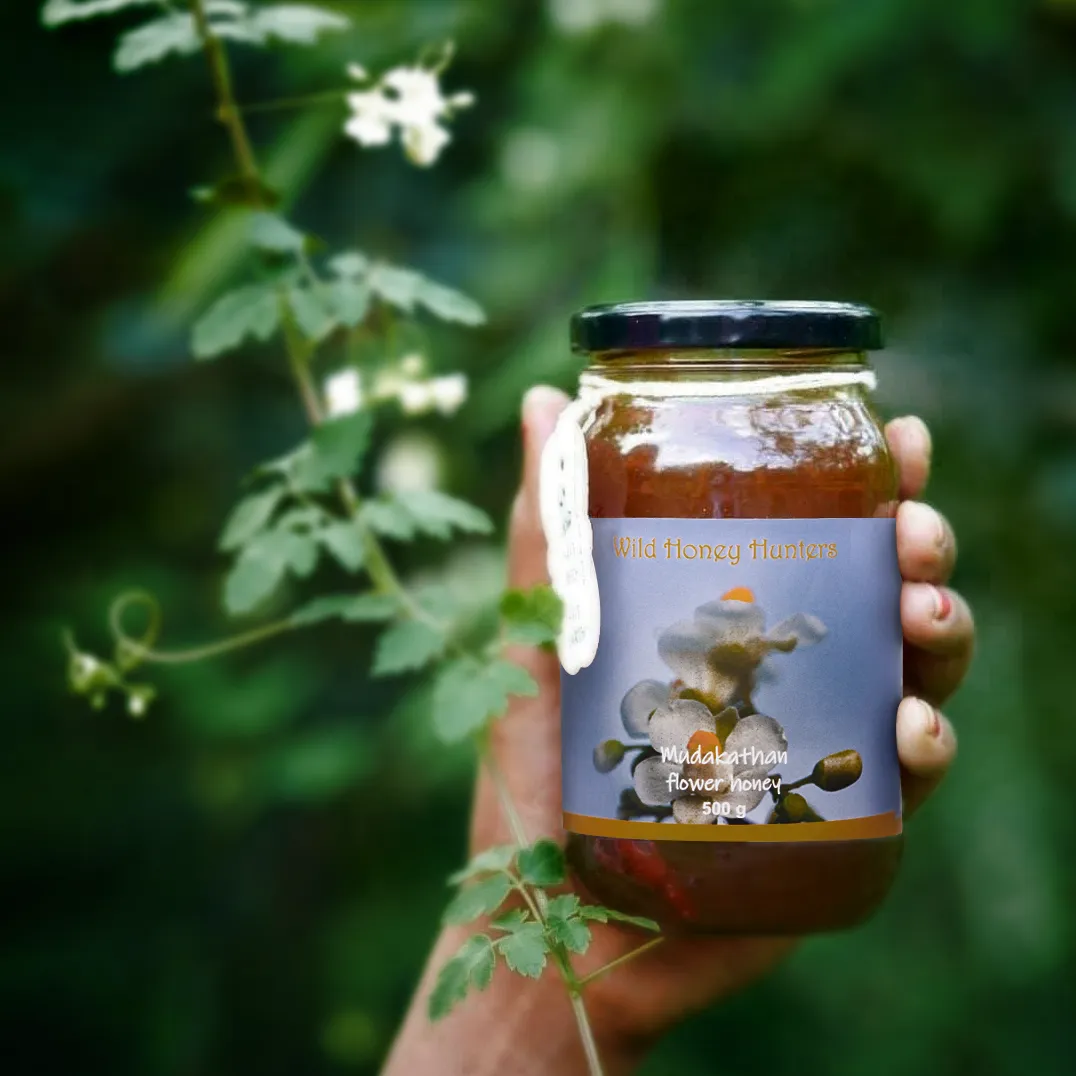
Mudakathan Honey is known as a seasonal forest honey because it is produced only during a short period of the year. Unlike regular honey that is often available throughout the year, Mudakathan honey follows nature’s calendar, not human demand. Its availability depends completely on the Mudakathan plant, wild bees, and forest conditions.
This seasonal nature is what makes Mudakathan honey special, limited, and valued by honey lovers who prefer natural forest honey.
The Role of the Mudakathan Flower
The main reason Mudakathan honey is seasonal lies in the Mudakathan plant itself. This plant grows naturally in forest regions and blooms only during specific months, usually in the early part of the year.
- They produce nectar for a short time
- Bees collect nectar mainly from these flowers
- Honey made during this time carries the unique character of Mudakathan
When the flowering period ends, bees stop collecting nectar, and Mudakathan honey production pauses until the next season.
Wild Bees Follow Nature, Not Schedules
Wild bees do not depend on one plant all year round. They naturally move from one flower source to another based on what is blooming in the forest.
During the Mudakathan flowering season, bees primarily collect nectar from Mudakathan flowers, producing honey that naturally carries its distinct taste, aroma, and color.
After the season ends, bees shift to other flowers. This natural movement makes Mudakathan honey strictly seasonal and impossible to replicate outside its natural time.
Forest Climate Controls the Season
Forest climate plays a major role in determining when Mudakathan honey can be harvested. Factors like:
- Rainfall
- Temperature
- Soil moisture
This directly affects when Mudakathan plants bloom. Some years, the season may be slightly shorter or longer depending on weather conditions. The natural uncertainty contributes to the seasonal availability of Mudakathan honey.
Because wild honey hunters do not control forest conditions, they harvest only when nature allows.
Traditional Harvesting Keeps It Seasonal
At Wild Honey Hunters, our honey is harvested using traditional and ethical methods. The honey is never forced, bees are not fed sugar, and extraction is done only during natural harvesting seasons—not year-round.
This approach means:
- We harvest honey only when it is naturally available
- Bees are left with enough honey to survive
- The forest ecosystem remains balanced
Because we use no artificial methods to increase production, Mudakathan honey is available only during its natural season.
No Blending, No Mixing Across Seasons
One important reason Mudakathan honey remains seasonal is that it is not blended with other honey varieties. Some commercial honey brands blend different seasons or flower sources to maintain a consistent taste throughout the year.
Mudakathan honey is kept in its true seasonal form. This means:
- Each batch reflects a specific harvest time
- Taste and color may vary slightly every year
- Honey remains true to its source
This honesty is what many customers value.
Why Seasonal Honey Tastes Different?
Seasonal honey like Mudakathan often has:
- A distinct herbal or earthy taste
- A natural aroma of the flower
- Color that may change from year to year
These variations are natural and indicate that the honey has not been processed or standardized.
Why Mudakathan Honey Is Limited?
Mudakathan honey is limited because:
- The flower blooms only once a year
- Bees collect nectar only during that window
- Harvesting is done responsibly
- No artificial production methods are used
After the season ends, the honey is available only until stocks last, after which it disappears until the next harvest year.
How to Use Mudakathan Honey?
Mudakathan honey can be used in simple ways:
- 1 teaspoon in warm water in the morning
- As a natural sweetener
- Mixed with herbal drinks
Moderate daily use helps you enjoy its natural qualities.
FAQs
1. When is Mudakathan honey available?
Mudakathan honey is typically available in the early months of the year, when the Mudakathan plant flowers naturally in forest regions.
2. Why is Mudakathan honey not available all year?
Because the Mudakathan flower blooms only for a short season, wild bees collect nectar only during that period.
3. Is seasonal honey better than regular honey?
Seasonal honey comes from natural flowering sources and is never blended, making it more authentic than honey available all year.
4. How can I know Mudakathan honey is seasonal?
Seasonal Mudakathan honey may vary slightly in taste, color, and availability each year, depending on forest conditions.
5. Can Mudakathan honey be stored for long periods?
Yes, when stored properly in a dry place, Mudakathan honey can be used long after the harvest season.
Final Thoughts
Mudakathan honey is seasonal because it follows nature’s cycle. From the blooming of the Mudakathan plant to bee behavior and forest climate, every step follows a natural cycle.
When you choose Mudakathan honey from Wild Honey Hunters, you are choosing a honey that is honest, limited, and deeply connected to the forest. Its seasonality is not a limitation — it is proof of authenticity.