
Introduction
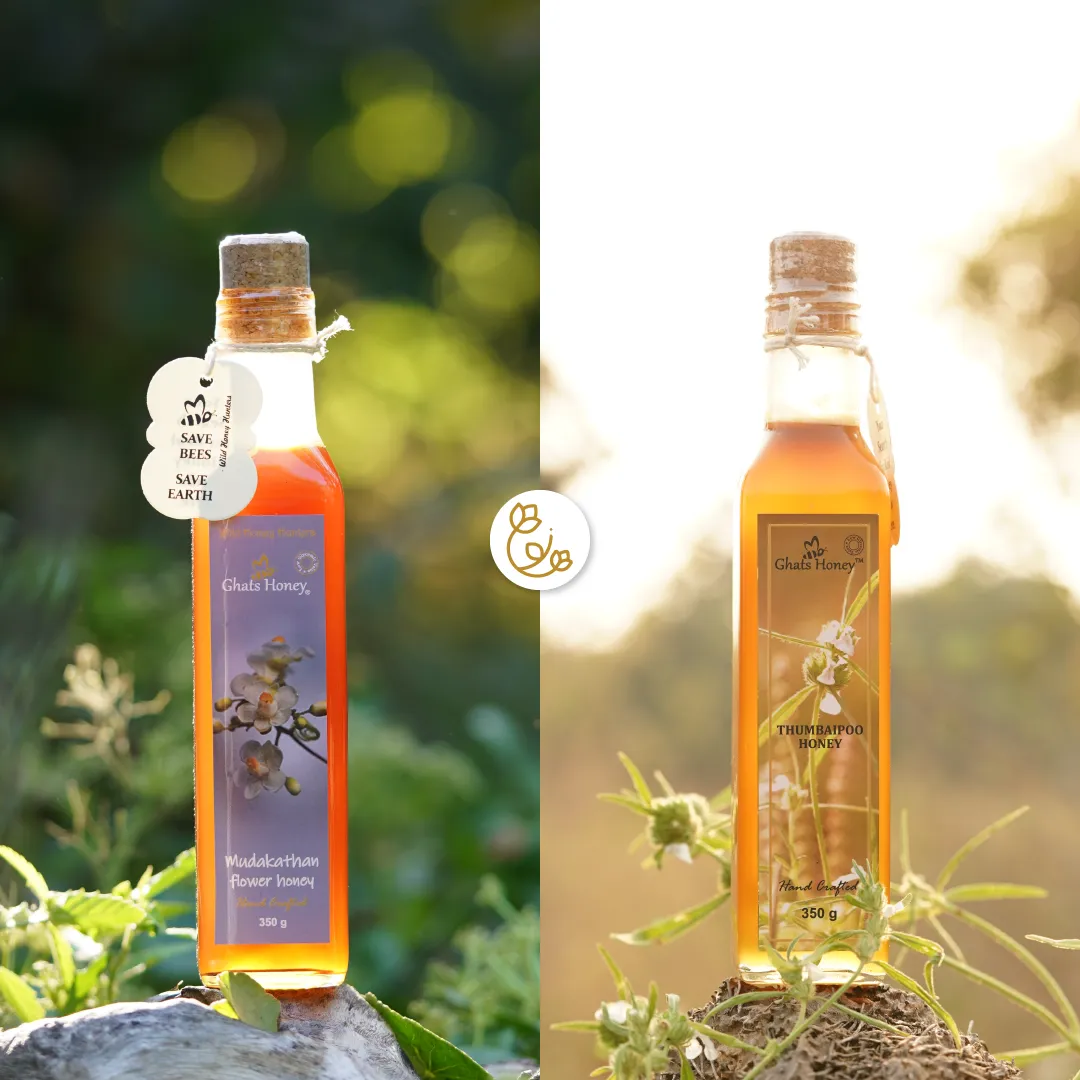
Mudakathan honey and Thumbai honey are both seasonal forest honey varieties, but they differ in their floral source, taste, seasonal availability, and traditional use. Although both types of honey come from wild regions, each variety reflects the specific plants that bees gather nectar from.
Understanding the difference helps you choose the right honey for your taste and lifestyle needs.
What Is Mudakathan Honey?
Mudakathan honey is harvested when bees collect nectar primarily from the Mudakathan plant (Cardiospermum halicacabum), a traditional climbing herb commonly found in forest edges and rural areas.
Traditional practices widely recognize Mudakathan for its association with:
✓ Joint comfort
✓ Flexibility support
✓ Natural energy booster
Characteristics of Mudakathan Honey:
- Medium amber color
- Slightly strong, herbal, fruity taste
- Mild earthy aroma
- Seasonal availability (mainly early months of the year)
Since the plant blooms during specific months, Mudakathan honey is only available during certain times of the year.
What Is Thumbai Honey?
Thumbai honey comes from nectar gathered from the Thumbai flower (Leucas aspera), a small, white, wildflower that grows naturally in dry, open lands.
Thumbai honey has long been associated with:
✓ Gentle digestive support
✓ Treat dry cough, sore throat, and cold
✓ Improve immunity for children and adults
Characteristics of Thumbai Honey:
- Light golden color
- Mild, smooth taste
- Soft floral aroma
- Seasonal harvest during the flowering period
Thumbai honey is usually lighter and milder compared to Mudakathan honey.
Key Differences Between Mudakathan and Thumbai Honey
Floral Source
Mudakathan honey: Sourced from Mudakathan flowers (a climbing medicinal plant)
Thumbai honey: Sourced from the Thumbai wildflower
Both types of honey are sourced from the nectar of different flowers.
Taste Profile
Mudakathan honey: Slightly stronger, herbal, fruity
Thumbai honey: Mild, light, and floral
If you like a stronger herbal tone, Mudakathan honey is a better choice. If you prefer light sweetness, Thumbai honey is ideal.
Color and Texture
Mudakathan Honey: Darker amber shade
Thumbai Honey: Lighter golden shade
Natural honey color depends on floral nectar and soil conditions.
Seasonal Availability
Both are seasonal honeys, but their flowering periods differ slightly depending on climate and region.
Seasonal honey means:
✓ Limited stock
✓ Natural variation
✓ No artificial year-round production
Traditional Associations
Traditional wellness routines often link Mudakathan Honey with joint and flexibility support. People commonly use Thumbai honey for mild digestion and daily balance. (These are traditional beliefs, not medical claims.)
Which One Should You Choose?
Choose Mudakathan honey, if:
- You prefer a stronger herbal flavor
- You are looking for a seasonal honey with earthy notes
Choose Thumbai honey, if:
- You prefer mild and light sweetness
- You want honey for daily general use
Both can be consumed in moderation (1–2 teaspoons per day) as part of a balanced diet.
Final Thoughts
The main difference between Mudakathan honey and Thumbai honey lies in their floral source, taste, colour, and traditional use. Both are seasonal forest honeys shaped by nature’s rhythms rather than factory processes. Choosing between them depends on your taste preference and how you plan to include honey in your routine.
By choosing pure Mudakathan and Thumbai honey from Wild Honey Hunters, you can truly enjoy their natural health properties.