Introduction
When choosing honey, many customers ask:
Is seasonal forest honey better than blended honey?
At Wild Honey Hunters, we believe understanding the source of your honey makes all the difference. Let’s explore the real difference between seasonal forest hoeny and blended honey — so you can choose wisely.
What is Seasonal Forest Honey?
Seasonal forest honey is harvested during a specific flowering period in a specific region. Bees collect nectar from naturally blooming flowers, and the honey reflects that exact season.
For example:
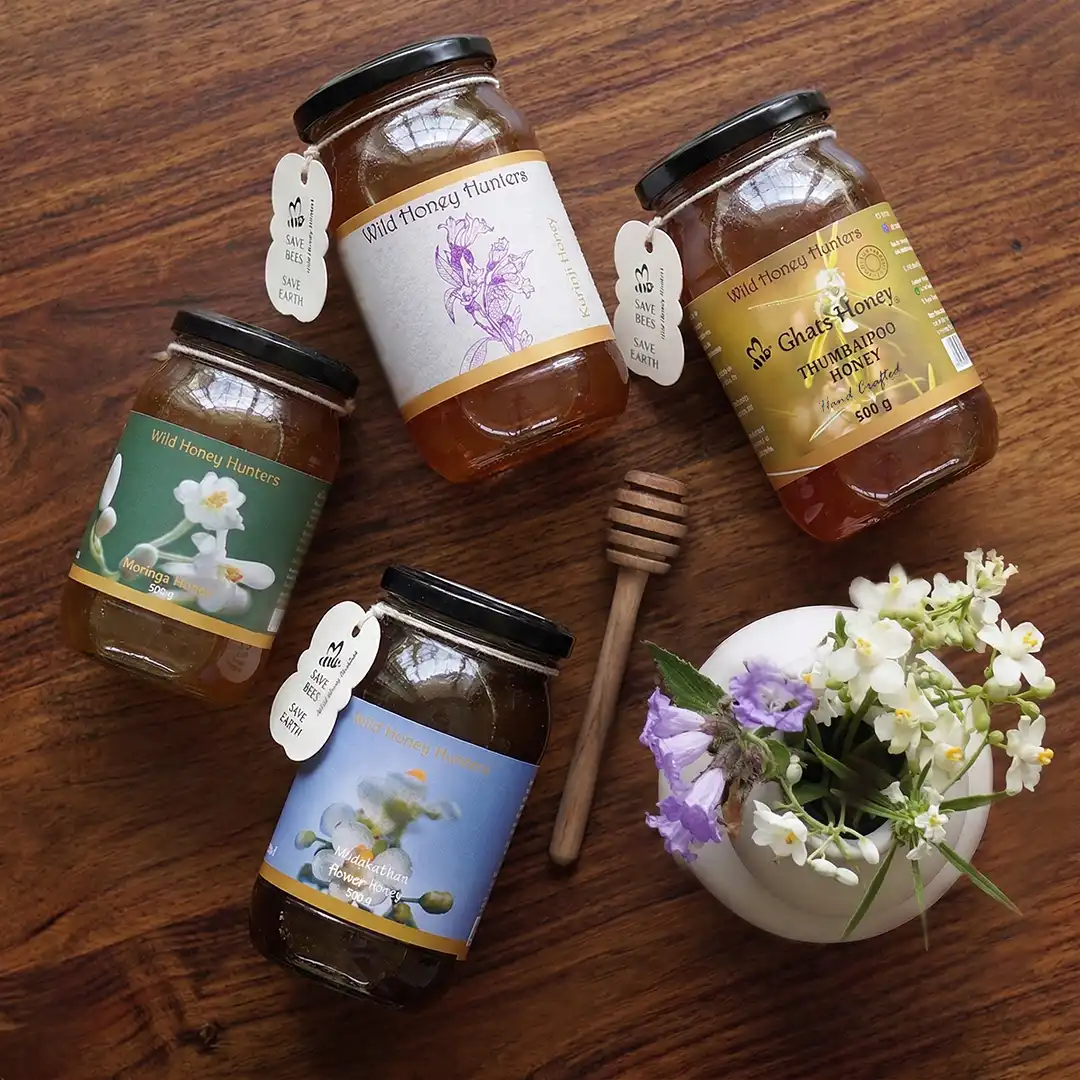
1. Thumbai honey during its bloom
2. Mudakathan honey in its season
3. Kurinji honey (rare flowering cycle)
4. Moringa honey during the moringa bloom
Each harvest is unique. The taste, colour, thickness and aroma may slightly change depending on that season’s flowers.
At Wild Honey Hunters, we collect honey only during its natural bloom cycle — not throughout the entire year from mixed sources.
What is Blended Honey?
Blended honey is typically a mixture of honey from:
- Multiple floral sources
- Different seasons
- Various regions
The purpose is consistent — same colour, same sweetness, same texture throughout the year.
While blended honey offers predictability, it often lacks the distinct seasonal character of true forest honey.
Why Seasonal Forest Honey Is Often Considered Better?
1. Authentic Seasonal Identity
Seasonal forest honey carries the signature of the forest and the flowering cycle. You are tasting nature as it is — not a standardized mixture.
Blent honey may lose this unique identity.
2. Minimal Processsing
At Wild Honey Hunters, our seasonal honey is:
✓ Raw
✓ Unheated
✓ Unblended
✓ Free from added sugar
Blended honey typically undergoes processing to maintain uniformity.
Less processing means more natural enzymes remain intact.
3. Natural Variation = Natural Integrity
- If honey tastes slightly different batch to batch — that is a good sign.
- Nature does not produce identical outcomes every time.
- Seasonal variation reflects authenticity.
- Blended honey removes that variation to maintain sameness.
4. Traceable Source
Seasonal forest honey allows you to know:
- The region
- The flowering season
- The harvest time
Blended honey may combine sources, making traceability less clear.
When Is Blended Honey Useful?
Blended honey can be suitable for:
- Baking
- Large-scale food production
- Those who prefer a consistent taste every time
But if your goal is purity and forest authenticity, seasonal honey stands apart.
Wild Honey Hunters Philosophy
At Wild Honey Hunters, we focus on:
✦ Seasonal harvesting
✦ Ethical collection
✦ Forest-sourced honey
✦ No artificial blending
✦ No added sugars
We respect nature’s timeline. If a flower blooms only for a short period, the honey is available only for that period.
That is why some of our honey varieties are limited and seasonal.
Final Answer: Is It Better?
If you value:
✓ Natural flavour variation
✓ Forest identity
✓ Seasonal authenticity
✓ Minimal processing
✓ Traceable sourcing
Then yes — seasonal forest honey is better than blended honey.
It is not about marketing. It is about preserving nature’s original form.